
Volvo XC90 2015-2026 Owners Manual / Climate control / Setting the temperature for the rear seats
Volvo XC90: Climate control / Setting the temperature for the rear seats
The temperature can be set to the desired number of degrees for the rear seat climate zones.
Setting the temperature for the rear seats from the front seats
 Tap the symbol in the center
of the climate bar to open Climate view in the center display.
Tap the symbol in the center
of the climate bar to open Climate view in the center display.- Select the Rear climate tab.
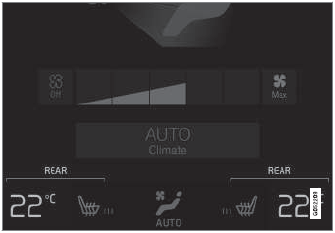
Temperature buttons in the Rear climate tab in Climate view.
- Tap the left- or right-side temperature button to open the control.
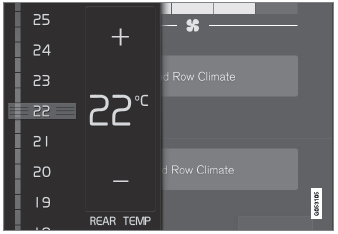
Temperature control.
- Set the temperature by:
- dragging the control to the desired temperature.
- tapping + − to raise/lower the temperature.
- The temperature will be set and the button will display the new temperature.
Setting the temperature for the rear seats from the rear seats
- Tap the unlock button on the tunnel console's climate panel to access the
controls.
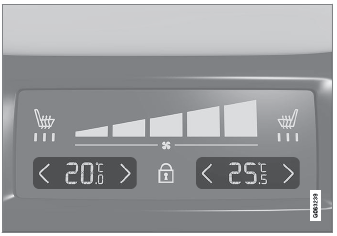
Temperature controls on the rear climate panel of the tunnel console.
- Tap the left or right side's < > buttons to lower/raise the temperature.
- The temperature will be changed and the climate panel screen will show the new temperature.
NOTE
Heating/cooling cannot be accelerated by choosing a higher/lower temperature than the desired temperature.
 Setting the temperature for the front seats
(The same setting applies to the rear seats with the 2-zone climate system.)
The temperature can be set to the desired number of degrees for the front
seat climate zones...
 Synchronize temperature
The temperature in the different climate zones of the vehicle can be synchronized
with the temperature set for the driver's side.
Synchronization button on the driver's side temperature control...
Other information:
Volvo XC90 2015-2026 Owners Manual: Interior Air Quality System. Activating and deactivating the air quality sensor
(Option/accessory) Interior Air Quality System (IAQS) is a fully automatic air quality system that removes gases and particles to reduce odors and contaminants in the passenger compartment. IAQS is part of the Clean Zone Interior Package (CZIP) and removes air contaminants such as particles, hydrocarbons, nitric oxides and ground-level ozone...
Volvo XC90 2015-2026 Owners Manual: Speed limit and speed camera warnings from Road Sign Information
(Option/accessory) There are subfunctions for Road Sign Information (RSI1) that can alert the driver if the speed limit has been exceeded or if there are speed cameras nearby. Example of speed camera and speed limit information in the instrument panel Speed limit warning When Speed Warning is activated, the symbol for the current speed limit in the instrument panel2 will flash temporarily if..
- Manuals Home
- 2nd Generation XC90 Owners Manual
- 2nd Generation XC90 Service Manual
- Video
- Jump starting using another battery
- Connecting the vehicle to the Internet via vehicle modem (SIM card)
- New on site
- Most important about car
Categories
Safety during pregnancy
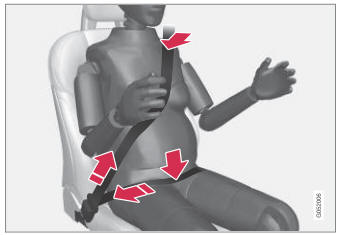
It is important that seat belts are worn correctly during pregnancy and that pregnant drivers adjust their seating position accordingly.
Seat belt

Copyright © 2026 www.voxc90.com